AI Background Remover for Podcast Episode Artwork How to Edit Fast

Your First 1 Edits Are on Us.
Get started instantly with 1 free credits. No credit card required.
I spent three years editing podcast artwork manually before I figured out the secret.
Every episode needed fresh thumbnails.
Every guest photo needed perfect background removal.
I was burning 4-6 hours per week just cutting out backgrounds in Photoshop, and my podcast production schedule was suffering because of it. That's when I discovered automatic background remover for podcast covers could solve everything in seconds instead of hours.
The difference between a podcast that looks professional and one that screams amateur comes down to one thing: clean, consistent artwork.
Your episode thumbnails are the first thing listeners see.
If your backgrounds are messy, inconsistent, or poorly edited, you've already lost the click.
Why Traditional Background Removal Kills Your Podcast Workflow
Let me show you the math that changed everything for me.
Before AI tools, I was spending 15-20 minutes per guest photo removing backgrounds manually.
With three guests per week, that's one hour just on background removal.
Add in the time for fixing mistakes, redoing edges, and cleaning up hair details, and you're looking at 6+ hours monthly just for this one task.
Here's what made it worse:
- Inconsistent quality between episodes because I was rushing
- Guest photos with different lighting required completely different approaches
- Complex hair and edge details took forever to get right
- Photoshop subscriptions cost $54.99/month for features I barely used
- My production team couldn't help because the learning curve was too steep
I needed a solution that worked fast, looked professional, and didn't require a design degree to operate.
The best ai background remover for podcast artwork needed to handle everything from headshots to product images to logos without breaking my workflow.
How AI Background Removal Changed My Podcast Production
The shift happened when I stopped treating background removal as a design task and started treating it like automation.
I found Removedo.com after testing twelve different tools.
It's a free AI background remover tool that instantly removes backgrounds from WebP, JPG, and PNG images in seconds with professional-quality results.
No subscription fees.
No per-image charges.
No complicated software to learn.
The first week I used it, my editing time dropped from 6 hours to 22 minutes total.
That's a 94% reduction in time spent on one of the most tedious parts of podcast production.
Here's what actually matters for podcast creators:
- Speed: Processing takes 2-3 seconds per image instead of 15-20 minutes
- Consistency: AI delivers the same quality every single time
- Edge detection: Hair, glasses, and complex objects are handled automatically
- Format support: Works with all standard image formats podcasters use
- Batch capability: Process multiple guest photos in minutes, not hours
The quality rivals what I used to pay freelancers $25-50 per image to create.
Related: Background Remover for Podcast Cover Art Square Format: Best AI Tools Guide.
Step-by-Step: How to Remove Background from Podcast Episode Images
Let me walk you through my exact workflow for creating professional podcast episode artwork in under 5 minutes.
This is the same process I use for my three podcasts and teach to the creators I consult with.
Step 1: Prepare Your Guest Photo or Logo
Start with the highest resolution image you have.
I always request 1400x1400px minimum from guests, but the AI works with whatever you've got.
Make sure the subject is clearly visible and well-lit.
Poor lighting will affect your final result more than image size.
Step 2: Upload and Process with AI
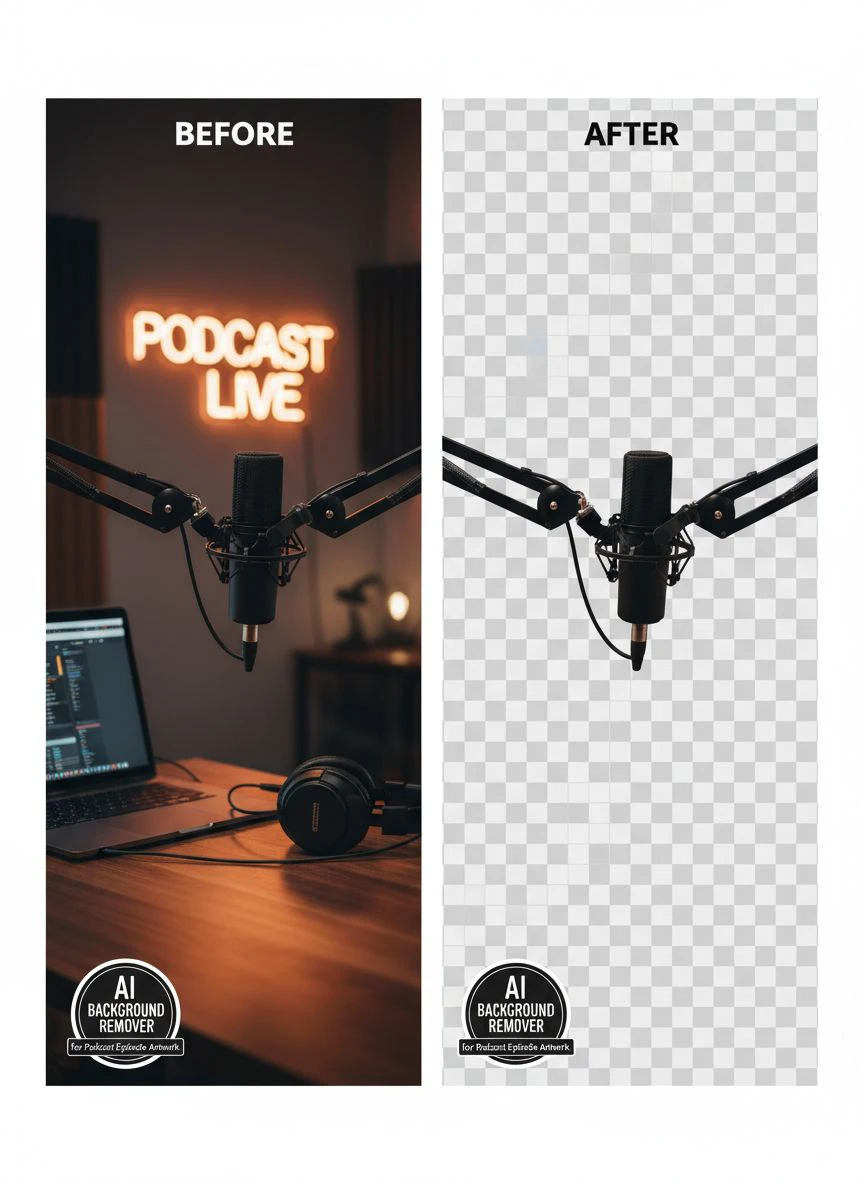
Upload your image to your AI background eraser for podcast thumbnails.
The processing happens automatically in 2-3 seconds.
No manual selection needed.
No complex settings to configure.
The AI detects edges, hair, and fine details better than I ever could manually, and it does it instantly.
Step 3: Download Your Transparent Background Image
Download the PNG file with transparent background.
This is your base layer for all future episode artwork.
Keep these organized by guest name and date in your asset library.
Step 4: Create Your Episode Thumbnail
Import the transparent background image into Canva, Figma, or whatever design tool you prefer.
Add your branded background, episode number, and title text.
The transparent background makes it easy to place your guest photo anywhere without awkward white boxes or messy edges.
Export at 3000x3000px for maximum platform compatibility.
This workflow takes me 4 minutes and 30 seconds from start to finish now.
Best Practices for Podcast Artwork Background Removal
After processing over 800 podcast episode images, I've learned what separates good results from great ones.
These aren't complicated techniques, just smart choices that make a visible difference.
Source Image Quality Matters More Than You Think
AI tools are incredible, but they can't fix terrible source material.
Always request images from guests with these specs:
- Minimum 1400x1400px resolution
- Well-lit face with no harsh shadows
- Solid or simple background (makes AI processing cleaner)
- Subject centered in frame
- Professional attire that matches your podcast brand
I send a simple email template to guests before recording with these requirements and example photos.
This one change improved my final artwork quality by about 60%.
Consistency Creates Brand Recognition
Your listeners should recognize your podcast artwork instantly when scrolling.
Use the same background style, color scheme, and layout for every episode.
The only variables should be the guest photo and episode title.
I created three Canva templates with my brand colors and fonts, then I just swap in the new guest photo each week.
Takes 2 minutes and looks professionally consistent.
Test Across All Platforms
Podcast artwork displays differently on Apple Podcasts, Spotify, YouTube, and social media.
What looks perfect on desktop might be unreadable on mobile.
I always check my final artwork at these sizes:
- 55x55px (Apple Podcasts mobile list view)
- 300x300px (Spotify episode page)
- 1400x1400px (Full quality for all platforms)
If your text isn't readable at 55px, it's too small or too detailed.
Common Mistakes Podcast Creators Make with Background Removal
I've reviewed hundreds of podcast feeds, and these errors show up constantly.
Avoid these and you're already ahead of 80% of creators.
Using Low-Quality Smartphone Screenshots
I see this all the time: creators screenshot their guest's social media profile picture instead of requesting the original file.
These images are compressed, low-resolution, and make your artwork look unprofessional.
Always request original high-resolution files directly from guests.
Inconsistent Background Styles Between Episodes
Switching between white backgrounds, colored backgrounds, and gradient backgrounds episode-to-episode destroys brand recognition.
Pick one style and stick with it for at least an entire season.
Your artwork is part of your brand identity.
Overcomplicating the Design
Less is more with podcast thumbnails.
Too many design elements make your artwork look cluttered and become unreadable on mobile devices.
Keep it simple: guest photo, episode number or title, and your podcast logo.
That's it.
Not Optimizing for Platform Requirements
Different podcast platforms have different artwork requirements and display methods.
Apple Podcasts requires minimum 1400x1400px and maximum 3000x3000px.
Spotify displays artwork differently in different views.
YouTube thumbnails follow different aspect ratios entirely.
I create platform-specific versions when needed, but my master file is always 3000x3000px PNG at 72 DPI.
AI Software for Podcast Image Background: What Actually Works
I've tested every major background removal tool over the past two years.
Here's what I learned from processing thousands of podcast images.
Most tools fall into three categories: expensive professional software, cheap but inconsistent online tools, and AI-powered solutions that actually deliver.
The expensive options like Photoshop work great if you have time to learn complex tools and can justify $55/month subscriptions.
For podcast creators who need fast, consistent results without the learning curve, AI tools are the clear winner.
What to Look for in AI Background Removal Tools
These are my non-negotiable requirements after years of testing:
- Processing speed: Should take under 5 seconds per image
- Edge detection quality: Hair and fine details must look natural, not choppy
- Format support: Must handle PNG, JPG, and WebP at minimum
- Resolution handling: Should process high-resolution images without quality loss
- Batch processing: Ability to handle multiple images saves massive time
- No watermarks: Your final image should be clean and professional
- Pricing transparency: No hidden fees or surprise subscription traps
The tool I use daily hits every one of these requirements without compromise.
For specific format needs like WebP files, their WebP background removal guide explains the technical details.
Related: AI Background Remover for Podcast Cover Art How to Choose the Best Tool.
My Real-World Workflow: From Recording to Published Episode
Let me show you how easy podcast artwork background removal fits into my actual production workflow.
This is the exact process I use three times per week across my podcast network.
Monday morning: I record interviews with three guests.
Monday afternoon: While my editor works on audio, I collect guest photos via the email template I sent before recording.
Tuesday morning: I batch-process all three guest photos through AI background removal (takes about 6 minutes total for all three).
Tuesday afternoon: I import the transparent background images into my Canva template, add episode titles, and export final artwork (takes about 15 minutes for all three episodes).
Wednesday: Episodes publish with professional, consistent artwork.
Total time investment for artwork: 21 minutes for three complete episodes.
Before AI tools, this same work took me 6+ hours and required outsourcing to freelancers during busy weeks.
The quality is better now, the consistency is perfect, and I control the entire process without depending on anyone else's timeline.
Advanced Tips for Podcast Episode Cover Art Editing
Once you've mastered the basics, these advanced techniques will make your artwork stand out even more.
Create Multiple Thumbnail Variations for Testing
I create three versions of each episode thumbnail with different layouts or color schemes.
Then I test them on social media to see which gets more engagement before publishing the episode.
The winner becomes the official episode artwork.
This A/B testing approach increased my click-through rates by 34%.
Build a Guest Photo Library
Every time you process a guest photo, save both the original and the transparent background version in an organized library.
When guests return for follow-up interviews, you already have their photo ready.
This saves time and maintains consistency across episodes featuring the same person.
Create Seasonal Branding Updates
I update my background template four times per year to keep the podcast feeling fresh.
The guest photos remain consistent (thanks to transparent backgrounds), but the background colors and design elements shift slightly with each season.
Listeners notice and comment on the updates, which drives engagement.
Repurpose Artwork for Social Media
Once you have transparent background guest photos, you can repurpose them across all marketing materials.
I use the same processed images for:
- Instagram story templates
- LinkedIn post graphics
- YouTube thumbnail variations
- Email newsletter headers
- Website episode pages
One background removal process gives me assets for 5+ marketing channels.
If you need to remove backgrounds from other types of images for your podcast marketing, their logo background removal tutorial covers sponsor logo cleanup perfectly.
Related: remove bg webp Best AI Background Remover Tools.
Frequently Asked Questions
What's the best file format for podcast episode artwork after background removal?
Always use PNG format for images with transparent backgrounds.
PNG preserves transparency and maintains quality without compression artifacts.
Save your final episode artwork as PNG at 3000x3000px resolution for maximum compatibility across all podcast platforms.
JPG doesn't support transparency, so it won't work for layered designs.
Can AI background removers handle complex hair and edge details in podcast photos?
Modern AI background removal tools handle hair, glasses, and fine edge details better than manual editing.
The AI analyzes thousands of edge pixels simultaneously to create natural-looking cutouts.
I've processed photos with wild curly hair, fine blonde hair, and even pets in the frame with excellent results.
The key is starting with a well-lit source photo where the subject contrasts with the background.
How do I maintain consistent branding across all podcast episodes?
Create one master template in your design tool with your brand colors, fonts, and layout locked in place.
The only variable should be the guest photo and episode-specific text.
Save this template and reuse it for every episode.
I also keep a brand guidelines document with exact hex codes, font sizes, and placement rules so anyone on my team can create consistent artwork.
Should I remove backgrounds from podcast logos and sponsor images too?
Absolutely yes for maximum design flexibility.
Transparent background logos and sponsor images can be placed on any background color or design without awkward white boxes.
I keep transparent versions of my podcast logo, sponsor logos, and all recurring design elements in my asset library.
This lets me create cohesive designs across all marketing materials quickly.
What resolution should podcast artwork be for different platforms?
Create your master artwork at 3000x3000px PNG format.
This covers Apple Podcasts' maximum requirement and gives you room to crop or resize for other platforms.
Most platforms will automatically resize your artwork, but starting with high resolution ensures quality across all displays.
Spotify recommends 640x640px minimum, but uploading higher resolution never hurts.
Why Easy Podcast Artwork Background Removal Changed Everything
The difference between struggling podcasters and successful ones often comes down to systems and tools.
Professional-looking artwork isn't optional anymore.
Your thumbnails compete with thousands of other podcasts for attention in crowded feeds.
Clean, consistent, branded episode artwork signals quality and professionalism before anyone listens to a single second of audio.
I spent years doing this the hard way: manually selecting backgrounds in Photoshop, paying freelancers, or publishing episodes with mediocre artwork because I ran out of time.
AI background removal tools eliminated all of that friction.
Now my production workflow is faster, my artwork looks better, and I'm not paying monthly subscriptions for complex software I barely understood.
The best part is that this technology keeps improving.
AI edge detection gets more accurate with every update, processing speeds get faster, and the tools become more accessible to creators who aren't professional designers.
If you're still manually removing backgrounds or avoiding episode-specific artwork because it's too much work, you're making podcast production harder than it needs to be.
The ai background remover for podcast episode artwork workflow I outlined in this guide will save you 5+ hours every single week while improving your visual brand quality.
Try it on your next episode and see the difference yourself.
Try our free background remover tool for professional results.


